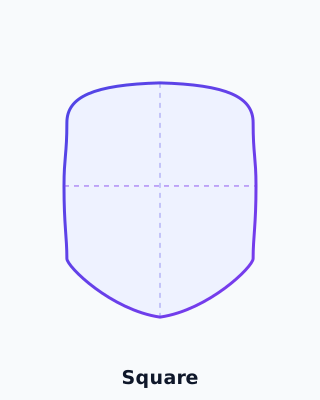
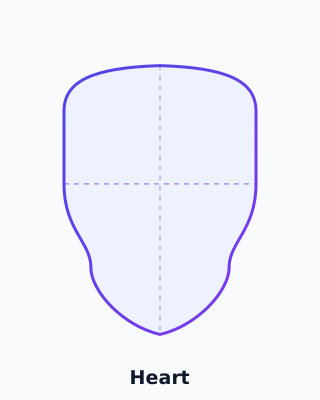
Angular structure is worth keeping. It photographs well and holds definition with age, so the aim is to make the jaw one strong feature rather than the only one. That means softening the transitions and lengthening the vertical axis.
Softening works through curvature placed directly against the corners. Waves. Layered movement starting below the cheekbone. Rounded rather than straight ends at the jaw. The classic mistake is a blunt horizontal line at exactly jaw level, since a chin-length blunt bob draws a straight edge across the widest and sharpest part of the face.
Lengthening works through height and asymmetry. Crown volume, an off-center parting and diagonal bangs break the symmetry that makes four equal corners obvious, while center partings and straight-across bangs reinforce the grid.
Frames and grooming follow identically. Round, oval and rimless frames introduce the curve the bone lacks, and heavy boxy frames repeat what is already there. Contrast the dominant geometry rather than echo it.
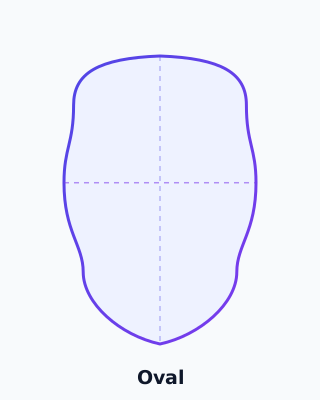
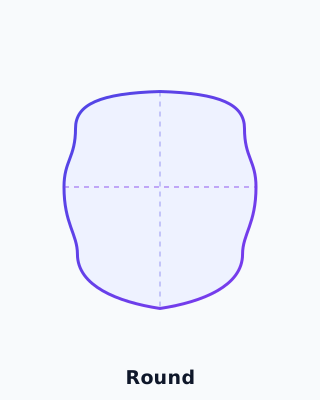
An outline with three widths inside roughly 5 percent above a mandible that corners on its way to the ear is what the classification names. The table sets those widths against round and oblong. The silhouette test resolves the face to a softened block in about ten seconds, and the fingertip run confirms the gonion. Round loses the corner, oblong keeps it but adds length, triangle narrows the forehead above it. Hair, weight, age and camera height each sharpen or soften the outline. Styling then places curve against angle and adds height, one rule applied to hair, frames and beard alike.
Measure before you decide. The face shape detector reads the three widths and the jaw curve from 468 landmark points in your browser, keeps every frame on your device, and names the shape.