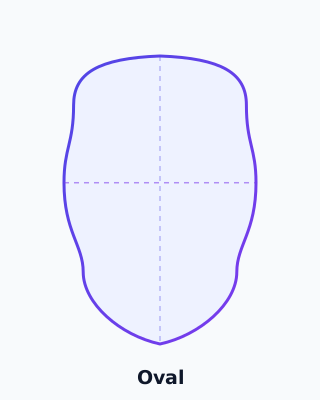
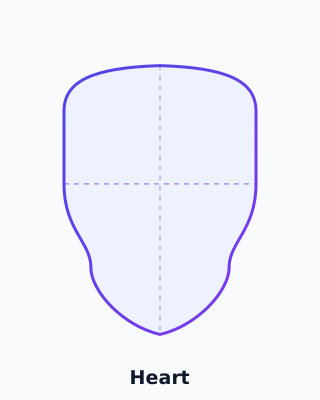
Baseline does not mean better. It means the proportions already land near the averages that cuts, frames and grooming templates assume, so there is no imbalance to correct. The governing idea shifts from correction to preservation.
Two rules follow. Keep weight off the jaw and off the crown at the same time, since adding both together is fine but adding only one tips the balance. And keep some forehead visible: heavy full bangs delete the vertical third that produces the 1.5 figure, and the outline collapses toward round.
Past that, this shape tolerates a wide range. So the productive question is not which style suits it but which other feature you want the style to address. A strong nose, a high forehead, a long neck. Choose for the feature and the proportion holds.
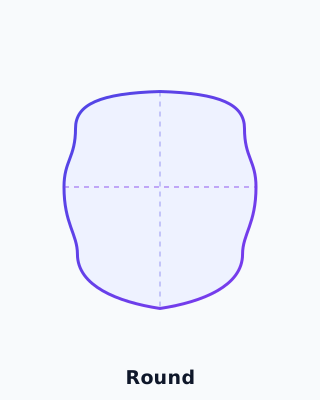
An outline running about half again its cheekbone width, tapering gently and cornering nowhere, is what the reference shape names. Four measurement rows set its boundaries, and four marks on glass confirm them without equipment. Oblong and round account for most wrong answers, with heart a distant third. Hair, weight, age and camera height each shift the result. Styling then works by preservation rather than correction, which is why forehead exposure matters more here than any particular haircut.
Measure before you style. The face shape detector reads these distances from 468 landmark points inside your own browser, sends no image anywhere, and returns the ratio next to the classification.