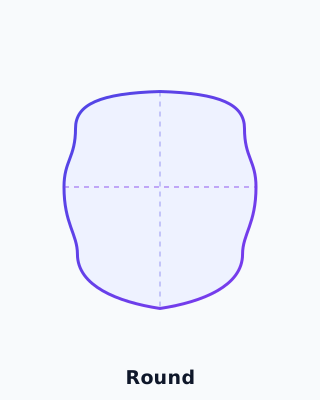
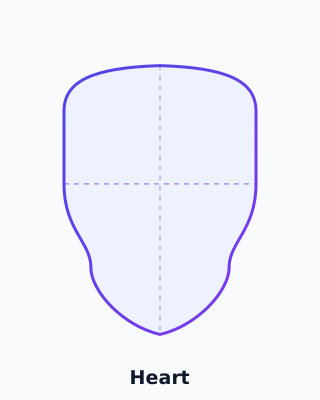
Vertical is the missing dimension, and angle is the missing edge. Two forces work against this outline at once: the proportion is compressed, and nothing in the silhouette gives the eye a straight line to follow. Useful styling supplies both.
Height, not length, creates the vertical. Crown volume, a deep side parting, long side-swept bangs cut on a diagonal, and hair falling in a narrow column past the jaw all add measured or perceived length. Length that hangs wide adds nothing, since it grows width at the same rate.
Straight lines create the angle. Diagonal partings, asymmetric bangs, A-line bobs longer at the front, and geometric eyewear each set a hard edge against a curved outline, and the contrast reads as definition. Soft round frames and blunt horizontal bangs fail here because they echo the curve instead.
Mass placement is the third lever. Keep volume above the cheekbone and below the jaw, never on the cheeks themselves.
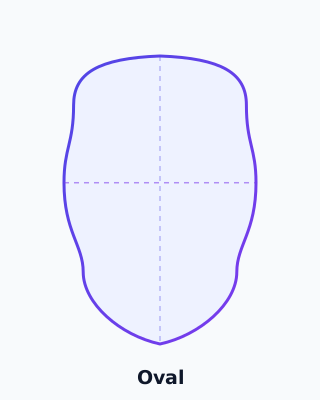
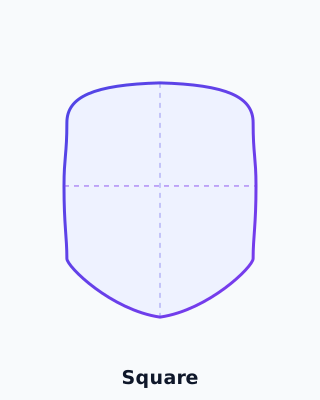
An outline whose length and cheekbone width sit within a few percent, widest across the cheeks and cornerless at the jaw, is what this classification measures. The proportion table draws the boundary against square. The home method finds the bulge at nose level and confirms it with tape. Square answers to the jaw corner test, oval to the arithmetic, heart to the chin. Hair, weight, age and lens distortion each rewrite the result, sometimes further than bone ever does. Styling then restores the vertical axis and the straight edge the shape lacks, and keeps mass off the cheeks.
Check the numbers before you commit to a cut. The face shape detector measures all four spans from 468 landmark points in your browser, uploads nothing, and reports the ratio with the verdict.