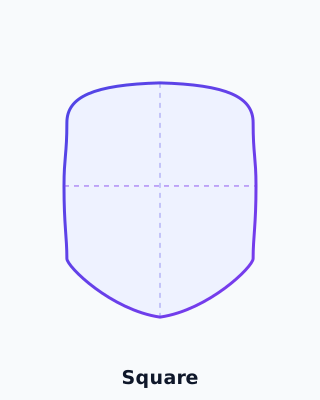
Two jobs run in parallel, and most styling errors come from doing only one. Widening the sides while leaving the crown high produces a broader face that is still as long as it was.
Shortening the vertical means interrupting it. Bangs are the single most effective tool available to this shape, because they remove visible forehead height and lay a horizontal line across the upper face. Blunt, curtain and soft full versions all work, provided the line runs roughly level and the forehead is genuinely covered. Keeping height off the crown is the other half of the same instruction.
Widening the horizontal happens at cheekbone and jaw level specifically. Waves, curls, layers that begin at the cheekbone and swing outward, and cuts finishing at the jaw or collarbone all add lateral mass where the column is narrowest relative to its length.
Frames and beards follow. Wide frames with a strong browline and deep lenses break the face into shorter sections, while a long goatee extends the axis that already dominates.
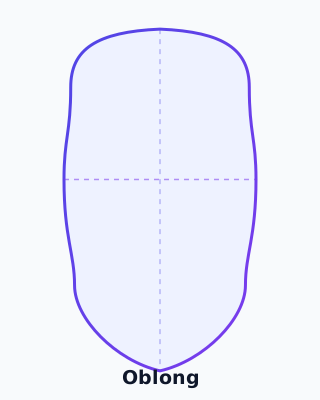
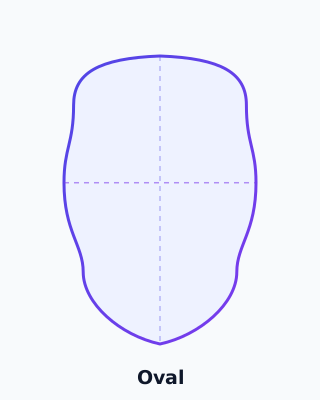
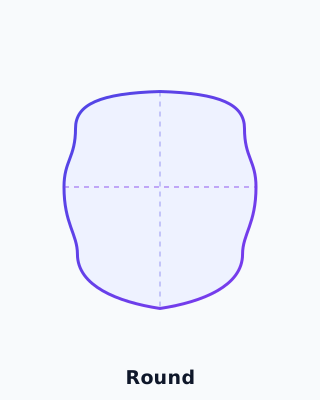
An outline whose length outruns its width with sides that never narrow, carrying its extra height in the middle third, is what this classification measures. The comparison table sets the ratio against oval and square. A pen at each temple checks the parallel, tape checks the length, and the rule of thirds confirms the midface. Oval is separated by taper, square by length, diamond by the cheekbone peak. Hair, weight, age and camera position each stretch or compress the column. Styling then runs two jobs at once: shorten the vertical with bangs and flat roots, widen the horizontal at cheekbone and jaw level.
Confirm the ratio before booking a cut. The face shape detector computes length against cheekbone width from 468 landmark points in your browser, keeps the image on your device, and names the result.